An exhibition is one of the few business situations where a delivery deadline is genuinely immovable. The show opens when it opens. If your stand, display materials, samples, or stock aren't there during the build-up window, there is no second chance — you exhibit with what you have, or you don't exhibit at all.
That's what makes event logistics fundamentally different from everyday delivery, and why so many exhibitors get caught out using the wrong kind of transport for it. This guide covers how to plan exhibition deliveries properly, the venue rules that trip people up, and how to choose the right courier for the job.
Why Exhibition Freight Is Different
Standard parcel and pallet networks are built for flexibility: your goods move through hubs, get consolidated with other freight, and arrive within a delivery window measured in days. That model works fine for routine shipments. It's a poor fit for events, where everything is fixed:
- Fixed delivery windows — venues allocate specific build-up slots, sometimes down to the hour, and arriving outside your slot can mean being turned away
- No tolerance for delay — a parcel that arrives the day after a trade show is worthless, regardless of how cheap the shipping was
- Venue-specific rules — loading bay booking systems, vehicle size limits, marshalling areas, and lift dimensions vary by venue
- High-value, awkward loads — display stands, banner systems, AV equipment, and sample stock are often fragile, oddly shaped, and expensive to replace at short notice
Most venues will not accept deliveries addressed simply to the venue. Consignments usually need to be labelled with the event name, hall number, stand number, and exhibitor name — and many venues refuse or misplace anything that isn't.
The Three Phases of Event Logistics
1. Build-up (delivery in)
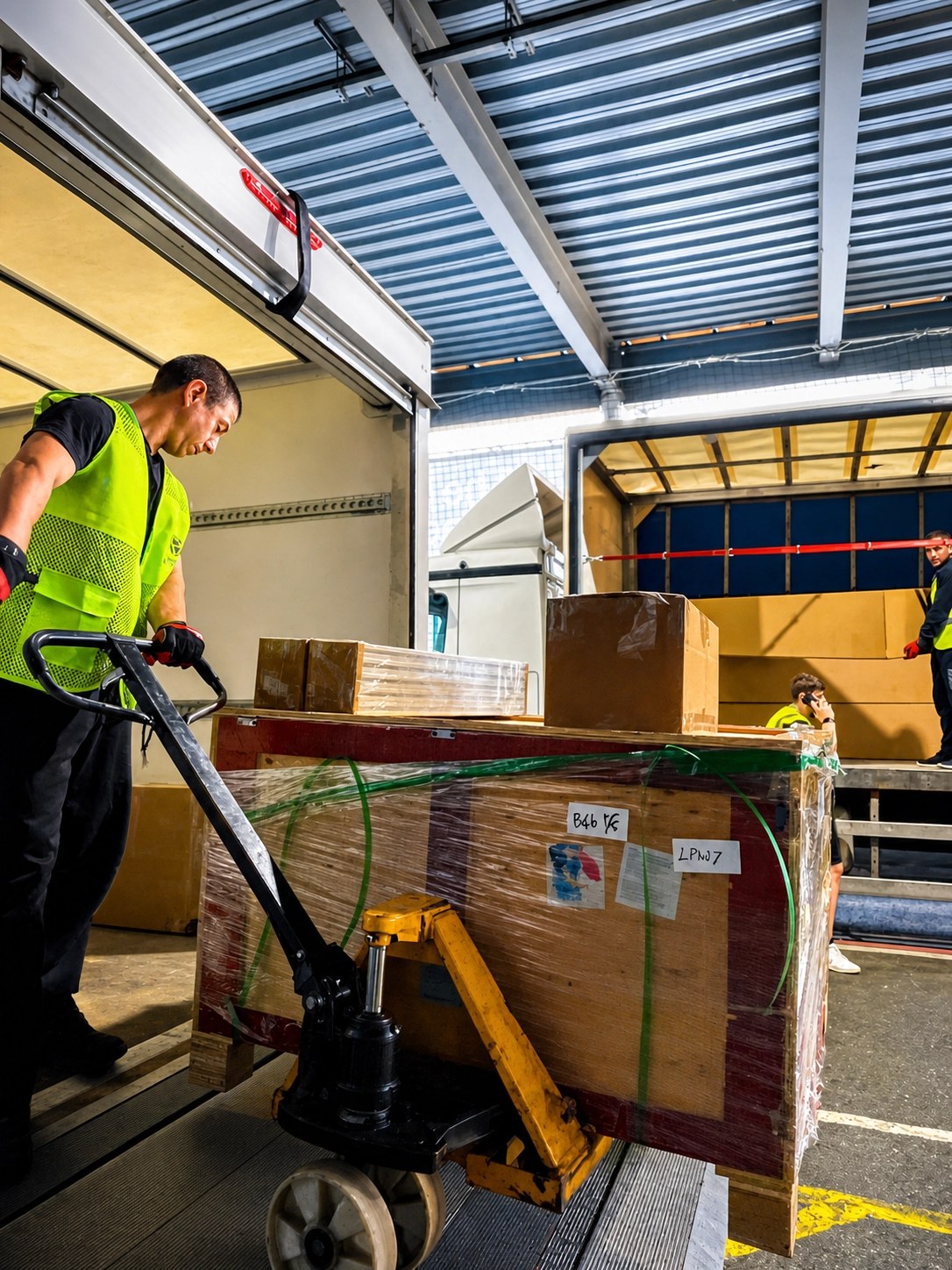
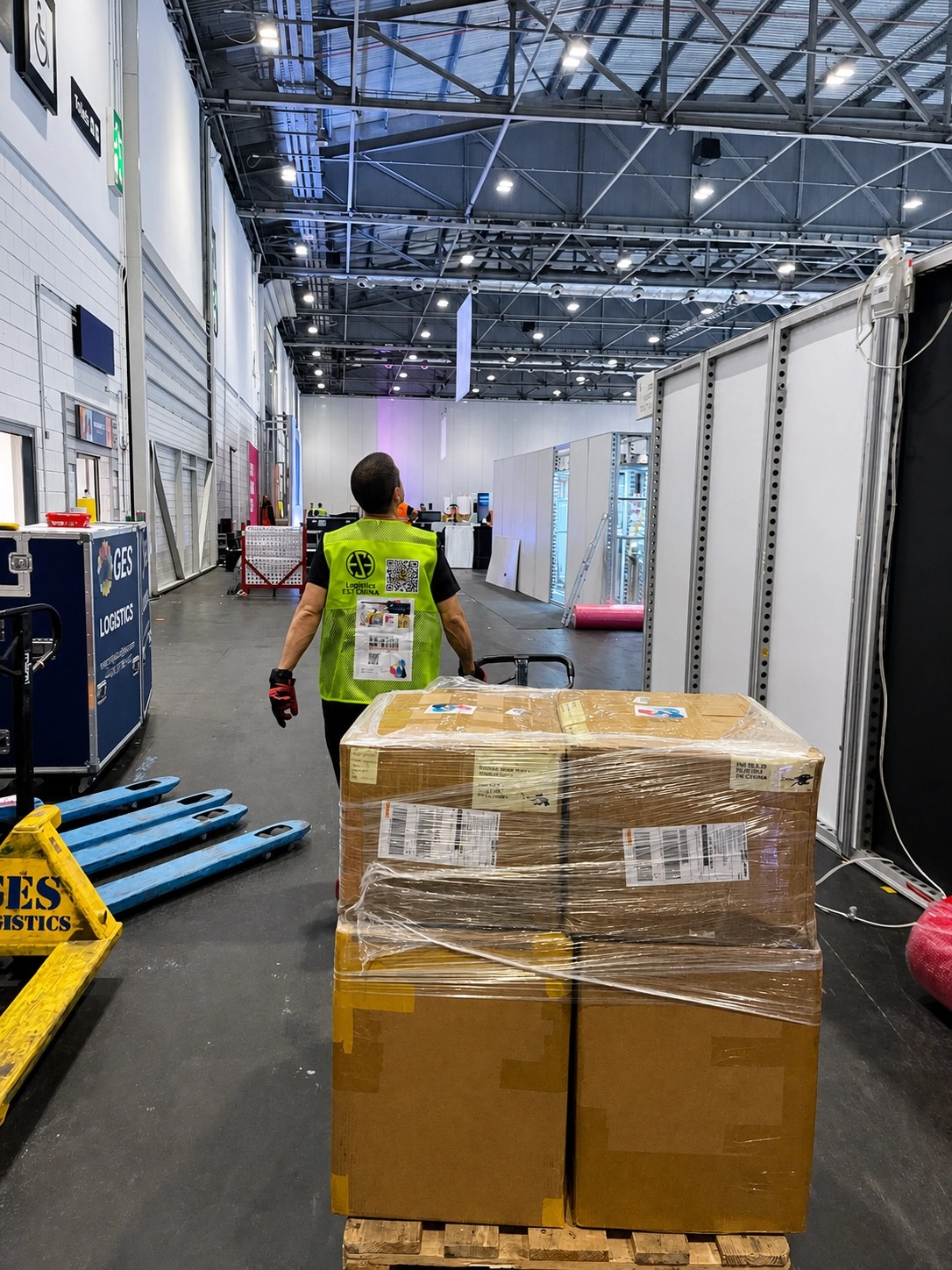
This is the most time-critical phase. You need your materials at the venue within your allocated slot, often early in the morning, and frequently with someone from your team there to receive them. A dedicated courier delivering directly — no hubs, no consolidation — gives you a precise arrival time you can plan around.
2. During the event
Things go wrong at shows: stock sells out faster than expected, a banner gets damaged, a crucial demo unit gets left at the office. A same-day courier on call during the event can be the difference between a fully working stand and an empty corner with an apology sign.
3. Breakdown (collection out)
Breakdown is chaotic by nature — hundreds of exhibitors packing up simultaneously, queues for the loading bay, and venue staff pushing everyone to clear the hall. A courier who arrives in the agreed collection slot and loads quickly saves you hours of standing around, and gets your equipment back safely for the next event.
The Venue Access Pass — And Why It Matters
Most first-time exhibitors don't realise that major UK venues — including the NEC in Birmingham, ExCeL London, and Olympia London — control delivery access through a timed pre-booked pass system. You can't simply turn up at the loading bay in a van; the venue needs to know which vehicle is arriving, when, on whose behalf, and for how long.
The pass is usually booked by the exhibitor or their stand builder, ahead of the show, through the venue's own logistics portal. It carries the booking reference, vehicle registration, driver's name, hall number, stand ID, arrival window, and allowed unloading duration. Miss your slot without prior arrangement and you can be turned away or fined — even if you're only ten minutes late.
Before booking a courier for a show at one of the major venues, check whether a pass has been arranged. If it hasn't, that's the first thing to sort. If it has, share the details with your courier so the arrival matches the booking exactly. A courier who's done this work will ask about it before quoting.
Expect delays at the gate
Even with a valid pass, arrival queues at the major venues can run one to three hours during peak build-up periods — sometimes longer at big consumer shows or during breakdown surges. This isn't the courier's fault or the venue's fault; it's the reality of hundreds of vehicles arriving in the same window. Build the buffer into your delivery timing. If your stand needs to be ready by 3pm, plan for the courier to be *in the queue* well before then, not still driving.
Planning Your Exhibition Delivery: A Checklist
- Get the exhibitor manual early. It contains the delivery address format, build-up schedule, loading bay procedure, and any vehicle booking requirements.
- Book your courier as soon as you have your slot. Good couriers get booked up around major shows — don't leave it to the week before.
- Label everything precisely. Event name, hall, stand number, exhibitor name, and a mobile number for the person on the stand.
- Share the venue details with your courier. Loading bay location, booking references, and any height or weight restrictions.
- Book the return collection at the same time. Breakdown slots fill up just like build-up slots do.
- Build in a buffer. Aim to arrive at the start of your window, not the end of it.
Compare your courier cost to the total cost of exhibiting — stand space, build, travel, staff time, and marketing. Delivery is usually a small fraction of the total, but it's the one piece that can render all the rest worthless if it fails. It's the wrong place to economise.
Dedicated Courier vs Pallet Network for Events
For exhibition freight, a dedicated same-day courier has structural advantages over a network service:
- Direct transport — your goods travel from your door to the venue in one vehicle, with no hub handling and far less risk of damage or loss
- Exact timing — you get an arrival time, not a delivery window measured in days
- One point of contact — you can speak directly to the person moving your goods, which matters enormously when a loading bay queue or slot change happens on the day
- Tail lift and the right vehicle — heavy display stands and palletised stock need the right equipment at both ends, agreed in advance
Choosing an Event Logistics Partner
Look for a courier that treats event work as a planned operation, not a standard drop:
- Experience with venue procedures — loading bays, marshalling, and exhibitor delivery rules
- Direct communication on the day — a person you can call, not a tracking page
- Flexibility for the unexpected — capacity for an urgent mid-show top-up run if you need one
- Goods in transit insurance — confirmed in writing, at a level that covers your equipment
- Public liability insurance — most venues require contractors to hold it before allowing access to the loading bay, and organisers will ask for the certificate
QM Transport handles exhibition and event logistics across Oxfordshire, Buckinghamshire, Warwickshire, Northamptonshire, Berkshire and London — including delivery into major venues, timed build-up slots, on-call support during your event, and breakdown collections. Pallet loads with tail lift are no problem.
We carry £2,000,000 public liability insurance alongside Goods in Transit cover up to £50,000, and can provide certificates to venue organisers on request.